Planhat
Customer success platform with client portals, health scoring, and revenue management
Pros
- ✓ Comprehensive customer success platform with portals as a native feature
- ✓ Powerful health scoring and analytics for proactive customer management
- ✓ More cost-effective than Gainsight with comparable functionality
Cons
- ✗ Enterprise-level pricing — not accessible for small businesses
- ✗ Steep learning curve during initial setup and configuration
- ✗ Custom pricing requires sales engagement — no self-serve plans
What Planhat Is
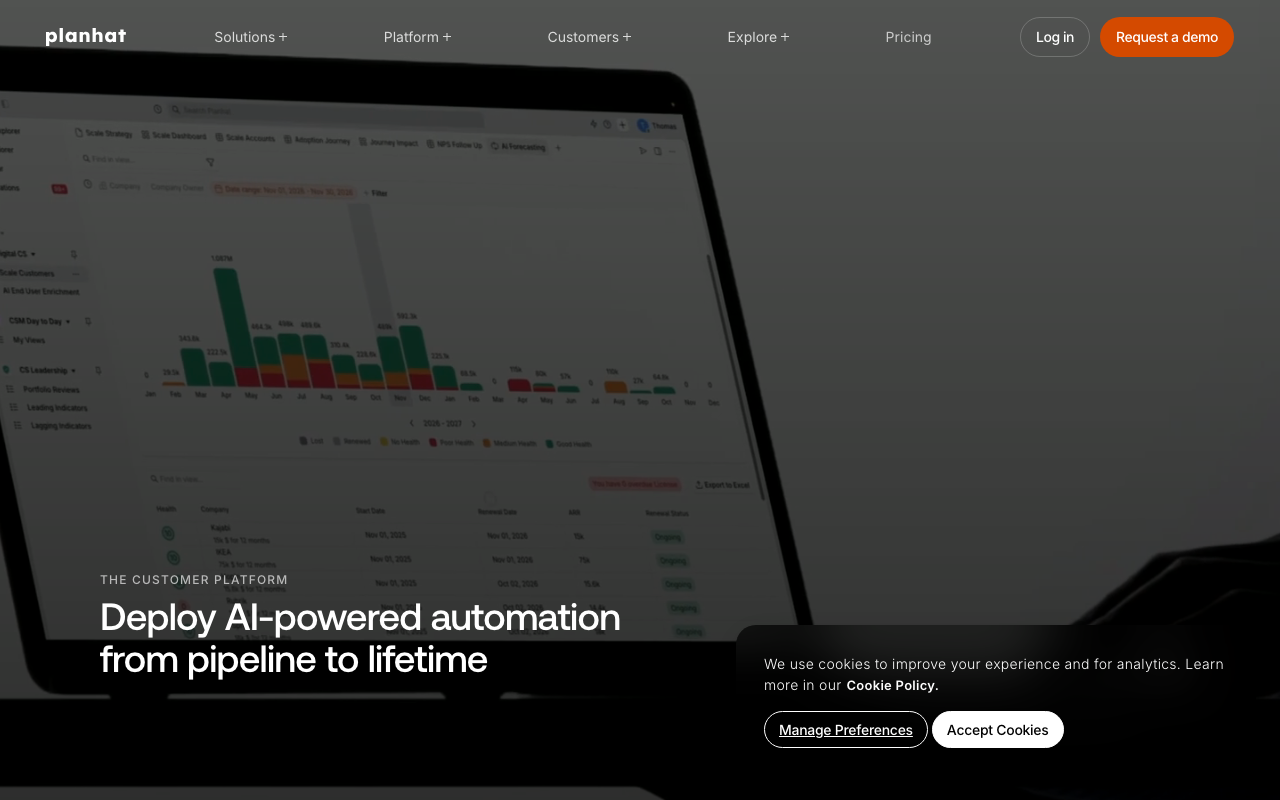
Planhat is a customer success and CRM platform that includes client portals as one feature within a broader commercial operations suite. If you're shopping for a standalone portal tool, Planhat is likely overkill — it's built for B2B SaaS companies that need a full customer lifecycle system, with portals serving as one touchpoint in that workflow.
The platform positions itself as a "customer platform" covering everything from pipeline management and onboarding through renewal and expansion. Customer portals live under the Collaboration capability set, alongside documents, dashboards, and embedded chat.
Portal Features
Planhat's portal functionality lets customer success teams create branded, shared spaces for client collaboration. The core portal feature is included in paid plans; Advanced Portals is available as a paid add-on and adds more customization, external ownership controls, and extended session capabilities (added in a January 2026 update).
Portals connect directly to live customer data from Planhat's unified data model — so health scores, project status, and usage metrics shown in a portal reflect what's actually in the system rather than manually refreshed snapshots. The January 2026 changelog also added customer notifications within portals.
Broader Platform Capabilities
The surrounding platform is substantial: health scoring, NPS surveys, churn and revenue management, project and task management, automation sequences, and a timeline-based data model that tracks every customer interaction. A recent AI layer (Planhat AIP) runs workflows, call summaries, and structured output automations — the changelog shows active development here through early 2026.
One frequently cited advantage is unlimited user seats, which Tess Okonek of OnsiteIQ specifically called out: internal stakeholders across product, marketing, and finance can access customer data without seat cost concerns.
Pricing
Planhat does not publish pricing tiers or per-seat costs publicly. All plans require contacting sales for a quote. Advanced Portals, upgraded AI capabilities, email marketing, and advanced professional services are available as add-ons. The company serves startups, scale-ups, and enterprise accounts — pricing structure and contract terms vary accordingly.
Integrations and Technical Details
Native integrations cover the major CRM and data tools; Salesforce integration is specifically mentioned with recent improvements to field syncing. An open API and MCP server provide programmatic access. The platform runs on Google Cloud Platform.
Security and Compliance
Planhat holds SOC 2 Type II and ISO 27001 certifications. Data is encrypted with TLS 1.2/1.3 in transit and AES-256 at rest, with daily and intraday backups stored in geographically separate locations. SAML 2.0 is supported with Okta, Azure AD, Google Workspace, ADFS, and custom SSO. GDPR and CCPA compliance are standard. Field-level and role-based access controls allow granular permissions.
Recognition and Customers
Planhat appears in Gartner's Magic Quadrant for Customer Success Management Platforms and IDC's MarketScape for Customer Success Applications. It has 880+ G2 reviews and leads in 9 G2 categories. Named customers include Trend Micro, Snowplow, and Cisco (a dedicated "Cisco 360" solution is referenced).
Who It's For
Planhat makes the most sense for B2B SaaS teams that need a full customer success infrastructure and want portals to be native to that system — not a separate tool to sync with their CS platform. For teams primarily seeking a client-facing portal with file sharing, forms, or project visibility, there are simpler and cheaper alternatives. For CS-heavy organizations where portals are one piece of a larger operational need, the tight integration with health data, automations, and revenue management is a genuine differentiator.

Maria Torres
Sales & Revenue Tools Editor
Last verified: 2026-02-25
Related tools