Client Onboarding Portals: Stop Chasing Documents
How onboarding portals replace messy email chains with structured intake, task checklists, and automated document collection — comparing GuideCX, Clustdoc, Content Snare, OnRamp, Arrows, and Rocketlane.

David Park
2026-02-24
Every service business knows the pain: you sign a new client, send a welcome email with a list of things you need, and then spend the next two weeks following up. "Did you get the email?" "Can you resend the contract?" "We still need your brand guidelines." It's death by a thousand follow-ups.
An onboarding portal replaces that chaos with a structured, self-service experience. The client gets a clear list of what they need to do. You get visibility into what's done and what's outstanding. And the portal sends the reminders so you don't have to.
What a good onboarding portal includes
Not every portal tool is designed for onboarding. The ones that are share these features:
- Task checklists — clients see exactly what they need to complete and in what order. Tasks can be assigned to specific people on the client side.
- Document upload requests — templated intake forms that collect the right files the first time. Each request slot is specific ("Upload your W-9" not "Upload documents").
- Automated reminders — configurable follow-up sequences that escalate from gentle nudges to urgent requests on your schedule.
- Progress tracking — a dashboard showing both you and the client what percentage of onboarding is complete, with clear visibility into blockers.
- Embedded content — welcome videos, SOWs, training materials, or knowledge base articles right in the portal, so clients have context alongside their tasks.
The best onboarding portal tools
GuideCX — Purpose-built for customer onboarding
GuideCX is the most focused onboarding platform on this list. It creates project plans with tasks assigned to both your team and the client, with real-time visibility for everyone involved. The external-facing experience is designed to make clients feel guided, not overwhelmed.
Key strengths:
- Customer-facing project plans — clients see their tasks, due dates, and progress alongside your team's milestones. Transparency builds trust and reduces "what's the status?" requests.
- Automated task assignments — when one task completes, the next one is automatically assigned to the right person (internal or external).
- Time-to-value tracking — analytics that measure how long onboarding takes, where bottlenecks occur, and how you improve over time.
- CRM integration — connects to Salesforce, HubSpot, and other CRMs so onboarding status flows back into your customer records.
Pricing: Custom pricing based on team size and volume. Generally $100+/month. Best for: B2B SaaS and professional services companies with complex, multi-step onboarding processes involving multiple stakeholders.
Clustdoc — Document collection and client intake
Clustdoc focuses specifically on document collection and structured client intake. Rather than project management, it's built around submission workflows — you define what you need, clients submit it, and you review and approve.
Key strengths:
- Submission workflows — create multi-step intake processes with required fields, file uploads, e-signatures, and conditional logic.
- Review and approval — submitted documents go through a review workflow where your team can approve, reject with comments, or request revisions.
- Client experience — the submission interface is clean and mobile-friendly. Clients see exactly what's needed and their completion status.
- Template library — pre-built templates for common intake scenarios (client onboarding, KYC, application processing).
Pricing: Starts at $100/month (5 users). Volume pricing available. Best for: Firms that need structured document intake and review workflows more than project management.
Content Snare — Automated content and document collection
Content Snare is designed specifically for collecting content and documents from clients. It's the tool you want when the main bottleneck in your process is getting stuff from people — and the main solution is persistent, automated follow-up.
Key strengths:
- Automated reminders — the standout feature. Content Snare sends configurable reminder sequences until clients submit what you need. You set it and forget it.
- Request templates — build reusable request lists for common scenarios. Each field can specify exactly what's needed, with examples and instructions.
- In-context instructions — add notes, examples, and reference images alongside each request so clients understand exactly what you're asking for.
- Approval workflow — review submissions and approve or request changes with one click.
Pricing: Starts at $29/month (Basic, 2 active requests). Standard plan at $69/month for more volume. Best for: Agencies and professional services firms where the primary onboarding bottleneck is getting clients to submit documents and content.
OnRamp — Guided onboarding experiences
OnRamp provides guided onboarding experiences with task management, document collection, and embedded resources. It's designed for B2B companies that want to reduce time-to-value for new customers through a structured, branded experience.
Key strengths:
- Guided flows — onboarding is presented as a step-by-step journey rather than a task list. Clients complete one step before moving to the next.
- Embedded resources — include training videos, documentation, and help articles directly in the onboarding flow.
- Custom branding — the onboarding experience is fully branded to your company.
- Analytics — track completion rates, time-to-completion, and identify where clients get stuck.
Pricing: Custom pricing. Contact for details. Best for: B2B SaaS companies that want a guided, branded onboarding experience to reduce time-to-value.
Arrows — HubSpot-native onboarding
Arrows integrates directly with HubSpot to create onboarding plans that live inside your CRM. If your team runs on HubSpot, Arrows is the most seamless option — there's no separate platform to manage.
Key strengths:
- HubSpot-native — onboarding plans sync directly to HubSpot deals and contacts. No data duplication or manual updates.
- Client-facing plans — clients get a clean, branded task list with due dates and instructions. Completion syncs back to HubSpot in real time.
- Deal pipeline integration — onboarding progress can trigger HubSpot workflows, update deal stages, and notify your team automatically.
- Task templates — reusable onboarding templates that standardize the process across your team.
Pricing: Starts at $500/month. Built exclusively for HubSpot users. Best for: HubSpot-centric teams that want onboarding tightly integrated with their CRM without managing a separate tool.
Rocketlane — Onboarding project management
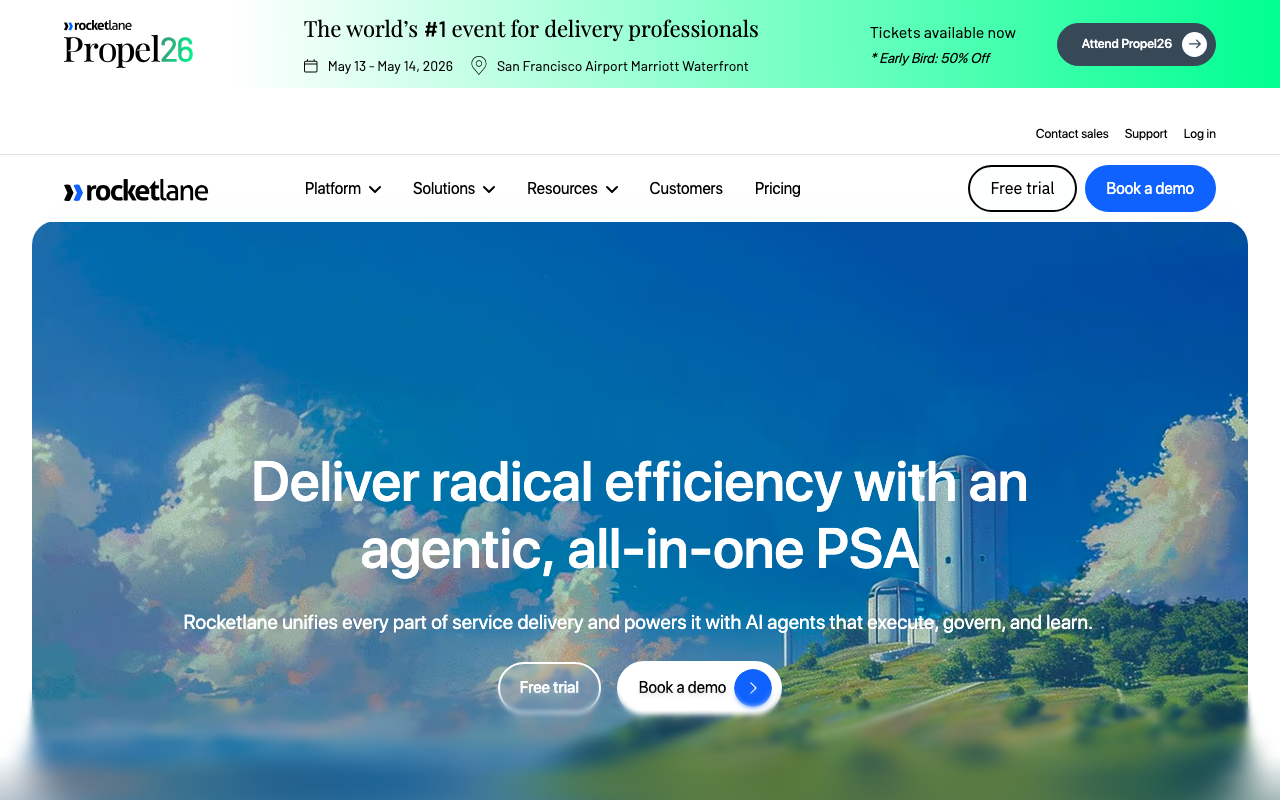
Rocketlane combines project management, document collaboration, and a client portal into a platform built specifically for customer onboarding and implementation. It's the most full-featured option on this list.
Key strengths:
- Project management — Gantt charts, task dependencies, resource allocation, and workload management. More robust than other onboarding tools.
- Client portal — clients get a branded portal with their project plan, shared documents, and communication threads.
- Time tracking — built-in time tracking for billing or measuring onboarding effort.
- Templatized playbooks — create detailed onboarding playbooks with phases, tasks, and automations that you can reuse across every new customer.
Pricing: Starts at $19/month per user (Essentials). Professional plan at $49/month per user for full portal features. Best for: Implementation and onboarding teams that need project management depth alongside client-facing collaboration.
How to choose
| Need | Best pick |
|---|---|
| Complex multi-stakeholder onboarding | GuideCX |
| Structured document intake and review | Clustdoc |
| Automated content/document collection | Content Snare |
| Guided, branded onboarding journeys | OnRamp |
| HubSpot-native onboarding | Arrows |
| Full project management for implementations | Rocketlane |
Ask yourself two questions to narrow this down quickly:
- Is your onboarding mostly document collection or project execution? If it's documents, start with Content Snare or Clustdoc. If it's tasks and milestones, try GuideCX or Rocketlane.
- Does your CRM need to be in the loop? If you're a HubSpot shop, Arrows is hard to beat. For Salesforce users, GuideCX has the strongest integration.
Next steps
Stop losing new clients in the gap between signing and kickoff. Browse all options in our onboarding portal category and start a free trial with the tool that matches your workflow.
More from the blog
Best Airtable Client Portals in 2026
A roundup of the best tools for building client portals on top of Airtable in 2026.
2026-02-25
What Is a Digital Sales Room (And Do You Need One)?
Digital sales rooms explained — what they are, how they work, and the best tools for replacing email attachments with a shared buyer experience.
2026-02-22
Secure Portals for Law Firms: What to Look For
What makes a client portal truly secure for legal work — privilege, confidentiality, e-signatures, and comparing Clio, MyCase, PracticePanther, Smokeball, LEAP Legal, and Zapa.
2026-02-20